
Moving to Littleton, Colorado: Buyer's Guide to Counties, Schools, and Neighborhoods
If you are moving to Littleton, the most important thing to understand before you start scheduling showings is this: a Littleton mailing address can place your home in Arapahoe, Jefferson, or Douglas County, put your children in any one of five different school districts, and land you in neighborhoods that range from a walkable historic Main Street to foothills-edge custom homes. Doing your homework by exact address, not just zip code, is the single most important step before you make an offer.
Littleton sits roughly ten miles south of downtown Denver, close enough to commute with real options, yet far enough to feel like its own distinct community. This guide covers the essentials: community character, housing market context, what to verify before going under contract, and how to approach buying a home in Littleton, Colorado.
What Makes Littleton a Draw for Relocating Buyers
Littleton draws relocating buyers with its walkable historic Main Street, robust trail access, multiple commute options, and a range of housing types that suit families, professionals, and move-up buyers alike. The city's downtown is lined with independent restaurants, galleries, breweries, and boutiques, the kind of amenity that buyers relocating from urban markets often worry they will lose. Outdoor access is woven into daily life, with parks, open space, and trail corridors connecting neighborhoods to the South Platte River and the foothills to the west.
Families appreciate access to well-regarded schools and a community-oriented suburban character. Professionals value the commute options, including RTD light rail service from multiple stations along the C-Line connecting Littleton to Union Station and the urban core.
Buyers relocating from higher-cost metros often find that Littleton real estate, while not inexpensive by national standards, offers genuine value compared to closer-in Denver neighborhoods.
There is also meaningful range within the market. Littleton includes historic cottages near Main Street, mid-century brick ranches on mature tree-lined lots, attached townhomes near transit and retail corridors, and larger custom homes on the community's more spacious western edges. That variety is an asset, but it also means that "the Littleton market" is not a single market. It is several overlapping ones, and a buyer's strategy should reflect that.
Understanding the Three-County Reality
When you buy in the Littleton area, the county your parcel sits in, Arapahoe, Jefferson, or Douglas, determines your property tax rate, school district assignment, and which local government manages your services. On top of that, some addresses carrying a Littleton mailing address sit outside the city limits entirely, falling in unincorporated portions of one of those counties or in an adjacent municipality.
Why does this matter in practice? County determines your parcel's tax rate and service providers. In practice, that affects:
- Property tax rates and recording fees
- School district assignment
- Fire district coverage and road maintenance responsibility
- Water and sewer provider
Two homes a few blocks apart can sit in different counties with meaningfully different cost and service profiles.
Before you fall in love with a specific address, confirm:
- Which county the parcel falls in
- Whether the property is inside the City of Littleton or in an unincorporated area
- School district assignment (covered in detail below)
- Property tax rate and any Metro District obligations
- Water and sewer provider
The City of Littleton's and the relevant county assessor's office are the most reliable starting points for this verification. This step applies across much of Colorado's suburban geography, but Littleton's multi-county footprint makes it especially relevant for relocating buyers here.
School Districts: Verify by Exact Address
Littleton Public Schools (LPS) serves the majority of addresses within the City of Littleton and is well regarded across the south metro. Portions of the broader Littleton area fall under different districts, however, depending on exact location:
- Properties in the Jefferson County portion may be served by Jefferson County Public Schools (Jeffco)
- A small section of the Douglas County portion may fall under Douglas County School District RE-1
- Some addresses near the city's borders are served by Sheridan School District or Englewood School District
Listing descriptions, ZIP codes, and neighborhood names are not reliable ways to confirm school assignment. The only reliable method is to check directly with the relevant district using the property's street address. Littleton Public Schools publishes boundary tools by address, and each district's enrollment office can confirm assignment for any parcel. Confirm school district before any offer, this is a step you cannot afford to skip, whether you have school-age children now or are buying with resale in mind.
Littleton Neighborhoods: A Community Overview
Littleton's neighborhoods divide into five broad subareas, each with distinct housing types, school district assignment, and lifestyle appeal, making address-level evaluation essential for relocating buyers. Here is a general orientation across the main subareas:
| Subarea | Typical Housing | Core Appeal | Primary School District |
|---|---|---|---|
| Historic Downtown and surrounding blocks | Older single-family, cottages | Walkability, Main Street dining and arts | Littleton Public Schools |
| Central established neighborhoods (Ketring Park, South Platte corridor) | Mid-century single-family on mature lots | Settled community feel, trail and park access | Littleton Public Schools |
| Ken Caryl (Jefferson County, outside city limits) | Single-family, newer and custom | Foothills open space, community amenities, 50-plus miles of trails | Jefferson County (Jeffco) |
| Transit-adjacent (Mineral Station, Aspen Grove corridor) | Condos, townhomes | C-Line light rail access, lower exterior maintenance | Varies by exact address |
| Upper-tier and foothills edge | Larger custom and semi-custom homes | Views, land, privacy | Varies by exact address |
A few notes on these subareas worth calling out:
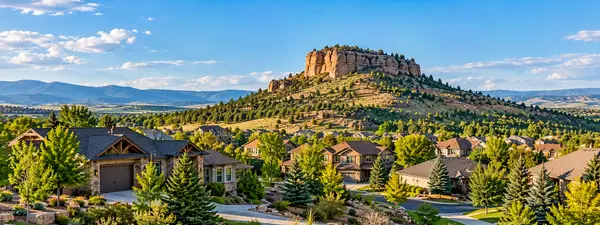
Ken Caryl is technically in Jefferson County and outside the Littleton city limits, but buyers comparing it to Littleton directly is common. It is a master-planned community with an equestrian center, parks, community pools, and trails winding through over 4,800 acres of open space that back up toward the foothills. School assignment runs through Jeffco, not Littleton Public Schools, a distinction that matters at resale.
Transit-adjacent condos and townhomes near Mineral Station and the Aspen Grove corridor appeal to buyers who want C-Line light rail access and reduced exterior upkeep. HOA review is particularly important in these communities: check reserves, special assessments, and any rental restrictions before going under contract.
Upper-tier and luxury properties, particularly custom homes with foothills views or in private golf communities, represent a distinct segment with its own micro-market dynamics, generally less sensitive to the headline pricing shifts affecting the broader market.
The principle across all of these Littleton neighborhoods is the same: evaluate by specific address, not by zip code or neighborhood name.
Littleton, CO Housing Market Context
Aggregated MLS listing data for the three months ending June 2026 shows median sale prices for Littleton homes in the mid-$600,000 range, with well-priced listings typically going under contract in roughly two to three weeks. Individual outcomes vary significantly based on property type, subarea, condition, and school district profile, homes for sale in Littleton span a wide price band, and a historic cottage near downtown and a newer townhome near a transit station are both "Littleton" but should not be compared using the same benchmarks.
The current market is more balanced than the peak years of 2021 and 2022. Buyers generally have more time to evaluate properties and negotiate terms, though well-priced, move-in-ready homes in desirable subareas still attract meaningful interest. Pricing strategy and timing continue to matter.
Price positioning across the Littleton market looks roughly like this:
| Segment | Where You'll Find It | General Price Orientation |
|---|---|---|
| Entry-level | Condos, townhomes, older single-family needing updates | Below mid-$400,000s (attached) |
| Mid-range | Bulk of the detached single-family market | Mid-$500,000s to low-$700,000s |
| Upper-tier and luxury | Custom homes, foothills-edge lots, golf community properties | $900,000 and above |
Price ranges above are general orientation based on aggregated MLS listing data, three months ending June 2026. Subarea, condition, and school district affect individual pricing significantly.
Speaking with a lender early to confirm your budget range will help you narrow down which Littleton subareas and property types to focus on.
Older Homes: What to Evaluate Before You Offer
Buying an older Littleton home typically means scrutinizing five fronts before you commit: Sewer lines, foundation, roof condition, electrical systems, and HVAC.
Here is what to focus on for each:
| Inspection Area | What to Focus On |
|---|---|
| Sewer lines | Root intrusion, pipe deterioration, and bellies in older clay or cast-iron laterals, a sewer scope is standard practice and strongly recommended |
| Foundation and soils | Colorado's Front Range expansive soils can cause foundation movement over time, look for cracks in foundation walls, basement slabs, driveways, and retaining walls |
| Roof and hail | The Front Range sees regular hail seasons, confirm roof age, prior hail claims, and insurance replacement cost coverage before closing |
| Electrical | Older homes may carry partial updates or original panels, confirm panel capacity and wiring type |
| HVAC and plumbing | Check water heater age, furnace condition, and whether any major system is approaching end of useful life |
None of these items should be dealbreakers on their own. They are part of informed buying in Littleton, Colorado, understanding what you are purchasing before you are committed is what separates a smooth relocation from a costly surprise after closing.
Commute and Transportation
Littleton's commute profile is one of its genuine strengths, particularly compared to farther-out suburbs. Downtown Denver is roughly ten miles north, accessible via Santa Fe Drive, Broadway, or I-25. The Denver Tech Center is reachable via C-470 and I-25 in a relatively direct route. RTD's C-Line light rail connects Littleton-Mineral Station to Union Station, confirmed as the active service routing as of June 2026, offering a car-free option for commuters headed into the urban core.
For buyers whose employers are in Highlands Ranch, Centennial, or other south metro business corridors, Littleton's proximity to C-470 and I-25 makes those destinations very manageable. Foothills routes are also accessible, an important consideration for buyers who plan to use recreation areas frequently or work in communities along the I-70 mountain corridor.
One due diligence note: Properties adjacent to light rail stations may experience train noise, parking spillover, and pedestrian activity that differs from quieter residential blocks. Factor station proximity into your evaluation alongside the transit convenience.
Working With a Local Agent Who Knows Littleton
Given Littleton's county complexity, multi-district school landscape, and neighborhood-by-neighborhood variation, the most useful step a relocating buyer can take is partnering with someone who knows how to distinguish between addresses, not just zip codes.
The differences between a Littleton address in Arapahoe County with LPS schools, one in Jefferson County under Jeffco, and one with a Littleton mailing address but outside city limits are not visible in online search filters. They require local knowledge, current market data, and the willingness to verify every relevant detail before advising on an offer, which is where a buyer's agent with genuine Littleton experience earns their value.
Ready to find the right Littleton neighborhood for your move?
Thaine Swanson and the Century 21 Altitude team know these communities at the address level, reach out at +1 (720) 221-1700, thaine@c21altitude.com, or send a message through Thaine Swanson's contact page to start your search.
Frequently Asked Questions
What is the difference between a Littleton mailing address and actually being inside the City of Littleton?
A Littleton postal address reflects mail routing, not municipal boundaries. Homes outside city limits may sit in unincorporated Arapahoe, Jefferson, or Douglas County, which changes property tax rates, service providers, and the government body responsible for local services. Verify jurisdiction directly with the relevant county assessor using the full parcel address, the mailing address alone will not tell you.
Which school district serves Littleton, Colorado?
LPS is the primary district within the city, but addresses in the broader Littleton area can also fall under Jefferson County Public Schools, Douglas County School District RE-1, Sheridan School District, or Englewood School District depending on exact location. No home search filter reliably reflects school boundaries, so confirm district assignment directly with the relevant district's enrollment office using the property's street address before submitting any offer.
What price range should buyers expect when buying a home in Littleton?
The market spans a wide spectrum. Entry points are most accessible in the condo and townhome segment and in older single-family homes needing updates. The detached single-family market sits primarily in the mid-$500,000s to low-$700,000s, with a mid-$600,000s median based on aggregated MLS listing data for the three months ending June 2026. Luxury and upper-tier properties in golf communities or on larger foothills-edge lots are priced well above that level. Subarea, school district, and condition all drive meaningful variation within each segment.
How long does it take to buy a home in Littleton?
From accepted offer to closing, the typical timeline runs 30 to 45 days, depending on financing type and negotiated contingency periods. Buyers with financing in place can move quickly when the right property appears, some desirable listings go under contract within two weeks, while others sit longer, giving buyers more room to evaluate. Your timeline also depends on how efficiently you complete the due diligence steps specific to Littleton, including county jurisdiction verification and school district confirmation.
Is Littleton a good fit for families relocating from out of state?
For many relocating families, Littleton checks most of the important boxes: suburban stability, extensive trail and outdoor access, a community-oriented historic downtown, and solid commute options to major Denver metro employment centers. The real key is matching the right neighborhood to a family's specific priorities, school assignment, commute direction, lot size, and budget. Two families with similar budgets but different needs could end up in very different subareas of the Littleton area, which is exactly why evaluating these communities at the address level matters before your search begins.
Recent Posts


GET MORE INFORMATION
